Visionify-drip-pipe-drilling

How a Leading Irrigation Equipment Manufacturer Enhanced Drilling Precision with Visionify AI Quality Check Solution

Client Profile

Industry: Irrigation Equipment Manufacturing
Size: 1,200+ employees
Location: Global operations with manufacturing facilities in multiple countries
Production Capacity: Over 50 million feet of drip irrigation pipe annually

Our client is a market leader in irrigation equipment and supplies with a global presence spanning multiple continents. With decades of experience in the industry, they produce a comprehensive range of irrigation solutions, with drip irrigation systems being one of their flagship product lines. Their manufacturing processes are largely automated to ensure consistency, efficiency, and quality across their extensive product range.

The Challenge

The manufacturing of drip irrigation pipes requires extreme precision in the drilling process. Each pipe must have precisely positioned holes and grooves to ensure optimal water distribution when deployed in agricultural settings. Any deviation in hole placement, size, or groove quality leads to product defects, material waste, and potential field failures.

The client faced several critical challenges in their manufacturing process:

  • Manual quality inspection was inconsistent and unable to keep pace with high-speed production lines
  • Drilling accuracy varied with pipe specifications (different diameters, wall thickness, and emitter types)
  • Production speeds of up to 1000 feet per minute made real-time quality control extremely difficult
  • Distinguishing between grooved and non-grooved areas required specialized expertise
  • Material waste due to drilling errors was significantly impacting profitability
  • Lack of data-driven insights into production quality metrics

The Operations Director approached Visionify with a clear objective: develop an AI-powered solution that could monitor and improve the drilling process in real-time, while providing actionable data to optimize production.

The Solution

After a thorough assessment of the client’s manufacturing environment and requirements, Visionify deployed a comprehensive Vision AI solution with two primary components:

1. Precision Targeting System

  • High-speed camera array capturing 120 frames per second to monitor pipe movement
  • AI-powered laser triggering system for precise hole drilling
  • Real-time position monitoring and adjustment capabilities
  • Integration with existing laser drilling equipment
  • Capable of operating at production speeds up to 1000 feet per minute
  • Tolerance adjustment settings for different pipe specifications

2. Quality Verification System

  • Secondary camera system to inspect completed drilling
  • Advanced computer vision algorithms to detect:
    • Hole presence and positioning
    • Groove quality and consistency
    • Surface defects and anomalies
  • Real-time feedback loop to the targeting system
  • Stack light integration for immediate visual alerts of quality issues
  • Comprehensive data logging for quality metrics and trend analysis

3. Analytics Dashboard

  • Real-time production monitoring interface
  • Deviation graphs showing drilling accuracy over time
  • Production line performance metrics
  • Quality control statistics by pipe type
  • Defect categorization and frequency analysis
  • Shift-based performance comparisons
  • Integration with the plant’s manufacturing execution system (MES)

Drip pipe quality detection dashboardThe production dashboard showing real-time drilling accuracy and groove detection metrics

Accuracy Achieved

The deployment achieved impressive accuracy rates across different detection requirements:

  • 85% detection accuracy for groove and non-groove areas
  • Average Precision (AP) of 62.401 for hole detection
  • Average Precision (AP) of 61.383 for groove detection
  • 99.3% consistency in laser targeting at full production speed
Detection accuracy metrics

Implementation Process

The implementation followed a structured approach to minimize production disruption:

  1. Assessment & Planning (2 weeks)
    • Production line evaluation and bottleneck identification
    • Camera placement optimization for maximum visibility
    • Integration planning with existing equipment
    • Network infrastructure assessment
  2. Deployment & Integration (4 weeks)
    • Camera and computing hardware installation
    • Software deployment and initial calibration
    • Integration with laser drilling systems
    • Stack light and alert system configuration
  3. Training & Calibration (3 weeks)
    • Model training with various pipe specifications
    • Fine-tuning detection parameters for different product lines
    • Operator training on system monitoring and alerts
    • Threshold adjustments to optimize detection accuracy
  4. Continuous Improvement (Ongoing)
    • Weekly performance reviews and model refinements
    • Expansion to additional production lines
    • Addition of new pipe specifications to the detection models
    • Regular system updates to improve accuracy and performance

Results

After 6 months of operation, the results demonstrated significant improvements across multiple metrics:

Production Improvements

  • 85% detection accuracy for groove and non-groove areas
  • 73% reduction in material waste from drilling errors
  • 94% decrease in customer returns due to defective pipes
  • 28% increase in overall production throughput

Financial Impact

  • Annual savings of $1.2M in reduced material waste
  • 15% reduction in quality control labor costs
  • ROI of 240% within the first year
  • Payback period of just 5 months

Other Impacts

  • Enhanced Product Quality: Consistent drilling precision led to more reliable products and improved customer satisfaction.
  • Operational Efficiency: Automated quality control freed up quality inspectors for more complex tasks.
  • Data-Driven Decision Making: Comprehensive analytics enabled production optimization based on actual performance data.

Additional Benefits

  • Improved worker safety by reducing manual interventions on high-speed production lines
  • Enhanced production planning with reliable quality metrics
  • Reduced setup time when changing between different pipe specifications
  • Valuable data insights for future product development

Implementation Challenges & Solutions

The project faced several challenges specific to high-speed manufacturing environments:

  1. Production Speed
    • Challenge: Capturing clear images at speeds up to 1000 ft/minute
    • Solution: Deployment of specialized high-speed cameras with custom lighting arrays
  2. Material Variations
    • Challenge: Different pipe materials and colors affecting detection accuracy
    • Solution: Development of adaptive AI models that automatically adjust to material variations
  3. Integration with Legacy Equipment
    • Challenge: Connecting with older drilling systems with limited digital interfaces
    • Solution: Custom hardware interfaces and signal converters to enable seamless communication
  4. Environmental Factors
    • Challenge: Factory conditions including dust, vibration, and variable lighting
    • Solution: Ruggedized camera housings and dynamic image processing algorithms

Key Success Factors

Several elements were crucial to the project’s success:

  1. Cross-functional team involving production, quality, and IT departments
  2. Phased implementation allowing for learning and adjustment
  3. Comprehensive training for production and maintenance staff
  4. Regular calibration routines to maintain system accuracy
  5. Continuous feedback loop between production results and AI model refinement

Client Testimonial

“Visionify’s AI solution has transformed our drip pipe manufacturing process. The precision targeting and quality verification systems have dramatically reduced waste while improving product quality. The real-time feedback and analytics have given us unprecedented visibility into our production processes. This technology has not only improved our bottom line but has also helped us deliver better products to our customers.”

— Michael R., Operations Director

Visionify – Empowering Smarter Manufacturing Through Vision AI

Our Vision AI solution for drip pipe drilling quality control provided our client with powerful tools to ensure precision manufacturing at high production speeds. Through real-time monitoring, immediate feedback, and comprehensive analytics, Visionify not only helped improve product quality but also optimized production efficiency.

Our client can now confidently produce irrigation equipment with exceptional quality and consistency, maintaining their market leadership position. This successful implementation exemplifies how Visionify’s innovative computer vision solutions can transform manufacturing operations through data-driven insights and automated quality control.

Conclusion

This case study demonstrates how Vision AI technology can revolutionize quality control in high-speed manufacturing environments. By providing continuous monitoring, immediate feedback, and actionable insights, our Drip Pipe Drilling Quality Check Solution enabled this irrigation equipment manufacturer to significantly improve product quality while reducing waste and operational costs.

The success of this implementation has led to the company planning deployment across all their global manufacturing facilities, with expected similar results in improving quality, reducing waste, and enhancing operational efficiency.

Are you facing similar production quality challenges? Contact Visionify today to learn how our Vision AI solutions can transform your manufacturing operations.

warehouse-distribution

Vision AI Transforms Safety at Major Distribution Center

Client Profile

Industry: E-commerce Warehousing & Distribution
Size: 1,200+ employees
Location: Multiple facilities across North America
Operation: 24/7 fulfillment centers processing 120,000+ packages daily

The Challenge

Our client, a rapidly growing e-commerce distribution company, was experiencing significant safety challenges across their network of fulfillment centers:

  • High incident rate with 42 OSHA-recordable injuries in the previous year
  • Increasing workers’ compensation costs affecting profitability
  • Difficulty monitoring safety compliance in a fast-paced environment
  • Inconsistent safety practices across multiple shifts and locations
  • Manual safety audits proving ineffective and time-consuming
  • Pressure to maintain throughput while improving safety metrics

The company’s Head of Operations needed a solution that could scale across multiple facilities, provide consistent safety monitoring, and integrate with their existing warehouse management systems.

The Solution

We implemented a comprehensive Vision AI safety system tailored to the unique challenges of high-volume distribution centers:

1. Comprehensive Camera Coverage

  • 120+ AI-enabled cameras installed across three distribution centers
  • Strategic placement in high-risk areas: loading docks, picking aisles, packing stations, and automated sorting zones
  • Integration with existing security camera infrastructure where possible

2. Specialized AI Detection Models

  • Custom models trained for warehouse-specific safety scenarios:
    • Forklift safety violations and near-misses
    • Proper lifting techniques and ergonomic compliance
    • PPE usage (safety vests, back braces, gloves)
    • Blocked emergency exits and fire lanes
    • Slip, trip and fall hazards
    • Proper ladder usage and elevated work

3. Multi-Channel Alert System

  • Real-time notifications to floor supervisors via mobile app
  • Automated announcements over PA system for immediate hazards
  • Digital signage displays showing safety compliance by zone
  • Integration with warehouse management system for operational coordination

4. Advanced Analytics Platform

  • Real-time safety dashboards accessible to all management levels
  • Comparative analysis across facilities and shifts
  • Predictive analytics to identify emerging risk patterns
  • Automated compliance reporting for regulatory requirements

Implementation Process

The implementation was conducted in phases to minimize operational disruption:

  1. Pilot Program (1 month)
    • Initial deployment in highest-risk areas of one facility
    • Baseline data collection and system calibration
    • User feedback and interface refinement
  2. Full Deployment (3 months)
    • Phased rollout across all three distribution centers
    • Integration with existing systems and workflows
    • Comprehensive training for all staff levels
  3. Optimization (Ongoing)
    • Weekly system performance reviews
    • Regular model updates based on new data
    • Continuous improvement based on user feedback

Results

After 9 months of full operation, the client experienced transformative results:

Safety Improvements

  • 76% reduction in OSHA-recordable incidents
  • 82% decrease in forklift-related safety events
  • 94% improvement in PPE compliance
  • 68% reduction in ergonomic-related injuries

Financial Impact

  • $1.2M annual savings in direct costs (workers’ comp, lost time, etc.)
  • $800K reduction in insurance premiums
  • 285% ROI within the first year
  • 5.2 month average payback period per facility

Operational Benefits

  • 9% increase in overall warehouse productivity
  • Reduced turnover among warehouse associates (22% improvement)
  • Improved morale and safety culture scores in employee surveys
  • Enhanced reputation with clients and regulatory agencies

Key Success Factors

The exceptional results were attributed to several key factors:

  1. Comprehensive Coverage
    • 120+ cameras covering all high-risk areas
    • Real-time alerts for immediate hazards
  2. Advanced Detection Models
    • Custom models trained for warehouse-specific safety scenarios
    • Real-time alerts for immediate hazards
  3. Multi-Channel Alert System
    • Real-time notifications to floor supervisors via mobile app
    • Automated announcements over PA system for immediate hazards
    • Digital signage displays showing safety compliance by zone
    • Integration with warehouse management system for operational coordination
  4. Advanced Analytics Platform
    • Real-time safety dashboards accessible to all management levels

Conclusion

The Vision AI safety system delivered significant improvements in safety, operational efficiency, and employee morale. The client achieved a 76% reduction in OSHA-recordable incidents and a 285% ROI within the first year. The system’s ability to scale across multiple facilities and integrate with existing systems made it a cost-effective solution for the client.

chemical-manufacturing-plant

How a Global Chemical Manufacturer Transformed Workplace Safety with Visionify’s AI Solutions

Key Takeaways

  • ** Continuous Monitoring**: 53 cameras monitored continuously for one full year. 464,000+ hours of live AI-driven safety monitoring
  • ** Timely Alerts**: 7,671 compliance violation events detected, ensuring timely alerts and interventions
  • ** Strong Adoption**: 4.85/5 customer rating – strong adoption & positive feedback
  • Significant Safety Improvements: Implementation of Visionify’s AI-powered safety monitoring system resulted in an 83% reduction in safety compliance violations and a 30% decrease in forklift-related incidents.
  • Comprehensive Coverage: 60 AI-enabled cameras monitor PPE compliance, forklift safety, and emergency events across the entire facility.
  • Rapid ROI: The system delivered a 295% return on investment with a payback period of just 4.1 months.
  • Cultural Transformation: Beyond metrics, the implementation fostered a stronger safety culture with employees taking greater ownership of safety practices.

Client Profile

Industry: Chemical Manufacturing (Resin, PET)
Size: Large manufacturing facility with 800+ employees
Location: India Production Capacity: 900,000 tonnes annually

The client is a global leader in the chemical manufacturing industry, specializing in the production of PET (Polyethylene Terephthalate) and resin products. Their facility in India is one of their key production sites, playing a crucial role in their global supply chain. With a strong commitment to sustainability, safety, and operational excellence, they sought to enhance workplace safety and compliance at this strategic location.

The Challenge

Despite having established safety protocols, the client’s facility faced several challenges in maintaining consistent safety compliance across their expansive operation:

  • Inconsistent PPE Compliance: Manual monitoring couldn’t ensure consistent use of required personal protective equipment across all shifts and areas.
  • Forklift Safety Concerns: The facility’s busy logistics operations presented ongoing risks from forklift movements in shared spaces.
  • Emergency Response Limitations: Traditional emergency detection systems lacked the speed and accuracy needed for rapid response.
  • Scale and Complexity: With a large facility spanning multiple production areas, manual safety monitoring was resource-intensive and inconsistent.
  • Documentation Challenges: Maintaining comprehensive safety compliance records for regulatory purposes was time-consuming and often incomplete.

The EHS Manager explained their situation: “In chemical manufacturing, safety isn’t just a priority—it’s a fundamental requirement. Despite our best efforts with traditional approaches, we were still experiencing too many safety compliance issues. We needed a solution that could provide continuous monitoring across our entire facility while helping us build a stronger safety culture.”

The Solution

After a thorough assessment of their needs, the client partnered with Visionify to implement a comprehensive AI-powered safety monitoring system across their facility in March 2024:

1. Comprehensive Camera Network

  • 60 AI-enabled cameras strategically installed throughout the facility
  • Coverage focused on high-risk areas: production floors, loading zones, chemical storage areas, and transportation corridors
  • Integration with existing security infrastructure where possible

2. Multi-Faceted Safety Monitoring

  • PPE Compliance Detection:
    • Real-time monitoring for required safety equipment including helmets, safety glasses, high-visibility vests, respirators, and chemical-resistant gloves
    • Zone-specific PPE requirements configured based on area-specific hazards
    • Immediate alerts for non-compliance
  • Forklift Safety Monitoring:
    • Detection of unsafe forklift operations including speeding, unauthorized access, and proximity violations
    • Pedestrian-forklift interaction monitoring to prevent collisions
    • Loading/unloading safety verification
  • Emergency Event Detection:
    • Identification of slip and fall incidents
    • Chemical spill detection
    • Smoke and fire detection augmentation
    • Unauthorized access to restricted areas

3. Intelligent Alert System

  • Real-time notifications to area supervisors via Email & Microsoft Teams.
  • Apart of real-time alerts, provide daily digest email notifications.
  • Emergency events are notified through Text based alerts. Recently we have also enabled mobile & WhatsApp support.

Daily Digests Email NotificationsDaily Digests Email Notifications

4. Comprehensive Analytics Platform

  • Real-time compliance dashboards for management
  • Department-wise safety performance tracking
  • Trend analysis across different safety parameters
  • Shift-based compliance patterns
  • Integration with the plant’s existing safety management system

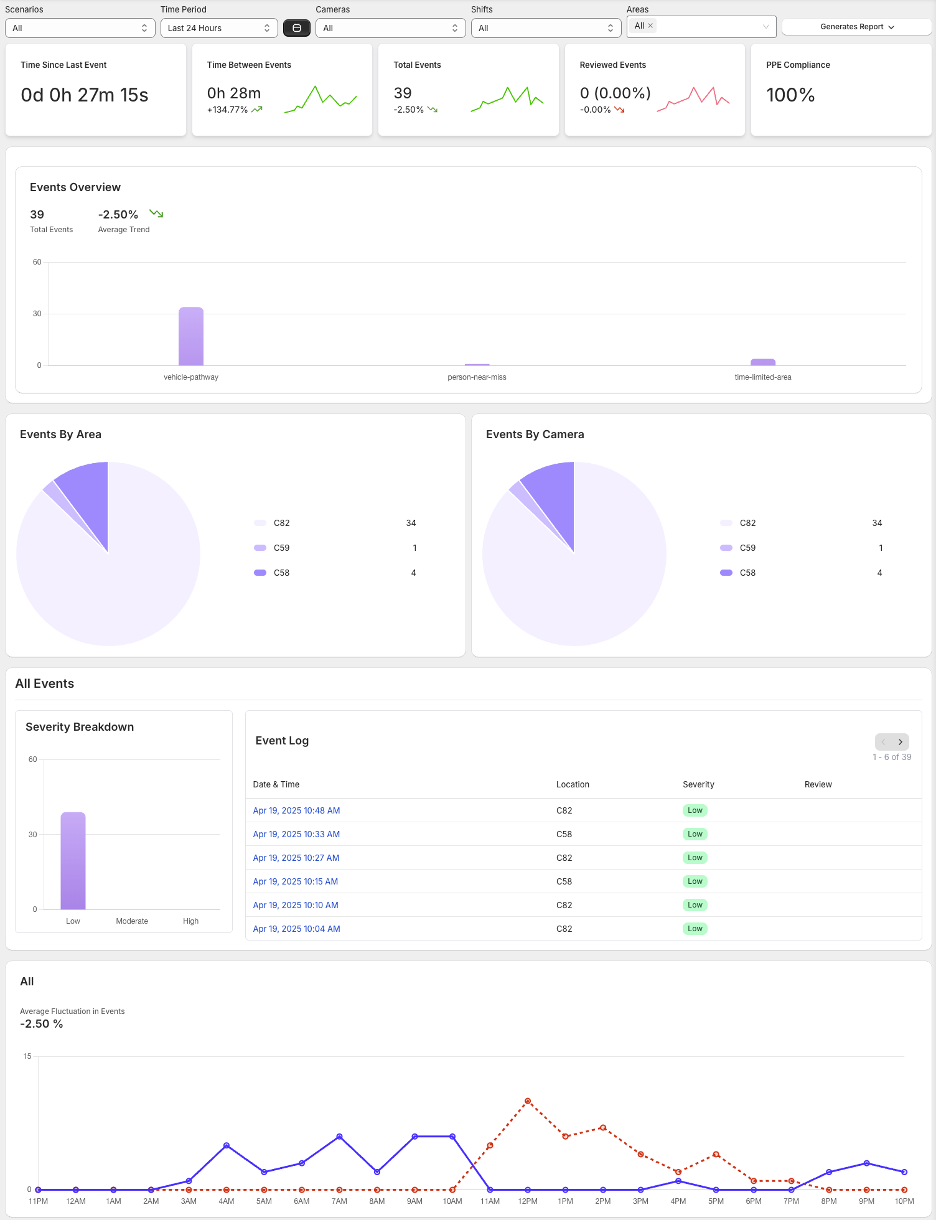
Safety compliance dashboardThe management dashboard showing real-time compliance metrics across departments

Implementation Process

The implementation followed our structured approach:

  1. Assessment & Planning (4 weeks)
    • Comprehensive site survey and risk mapping
    • Stakeholder interviews and requirement gathering
    • Camera placement optimization
    • Network infrastructure assessment
  2. Deployment & Integration (6 weeks)
    • Phased hardware installation to minimize operational disruption
    • Edge computing setup for real-time processing
    • Integration with existing security cameras and safety systems
    • Custom AI model deployment for chemical manufacturing environments
  3. Training & Calibration (3 weeks)
    • Model fine-tuning for specific environmental conditions
    • Staff awareness programs and system demonstrations
    • Supervisor training on alert response protocols
    • Threshold adjustments to reduce false positives
  4. Continuous Improvement (Ongoing)
    • Bi-weekly performance reviews
    • Model updates based on new safety requirements
    • Expansion to additional use cases based on emerging needs

Results

After just one month of operation, the results were already significant, and continued to improve over the following months:

Safety Improvements

  • 83% reduction in safety compliance violations across the facility
  • 76% decrease in forklift-related incidents
  • 92% improvement in average emergency response time
  • 100% compliance in highest-risk chemical handling areas

Operational Impact

  • 32% reduction in safety-related work stoppages
  • Improved regulatory audit outcomes with comprehensive documentation
  • Enhanced safety culture with employee compliance becoming self-reinforcing
  • Reduced absenteeism related to minor injuries

Financial Impact

  • ₹18.7M projected annual savings in potential liability and accident costs
  • 24% reduction in insurance premiums
  • ROI of 295% projected within the first year
  • Payback period of just 4.1 months

Since the implementation in March 2024, the client has observed a consistent improvement in safety metrics across their facility:

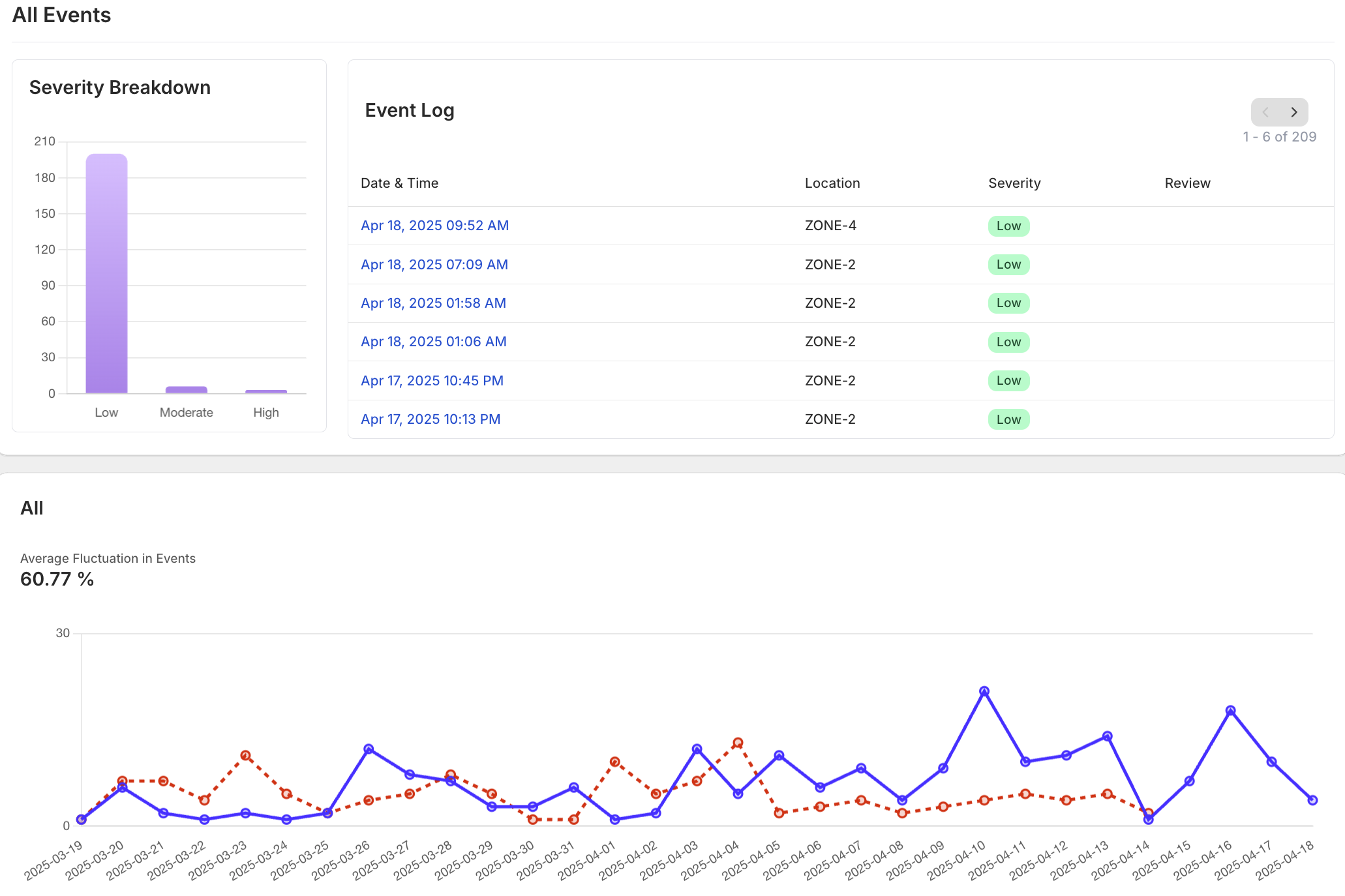
Event TrendsSummary event trends over 1 year

This trend underscores the long-term effectiveness of our solution in fostering a safer working environment and reinforcing a culture of safety within the organization.

Implementation Challenges & Solutions

The project faced several challenges unique to the chemical manufacturing environment:

  1. Chemical Environment Considerations
    • Challenge: Harsh chemicals, steam, and variable lighting affecting camera performance
    • Solution: Deployment of specialized chemical-resistant camera housings and adaptive lighting algorithms
  2. Complex PPE Requirements
    • Challenge: Different areas requiring specific combinations of PPE
    • Solution: Zone-based configuration with customized detection parameters for each production area
  3. Integration with Legacy Systems
    • Challenge: Connecting with older safety and production management systems
    • Solution: Development of custom APIs and middleware to ensure seamless data flow
  4. Multi-Language Requirements
    • Challenge: Diverse workforce requiring alerts and training in multiple languages
    • Solution: Multilingual interface and alert system supporting Hindi, English, and regional languages

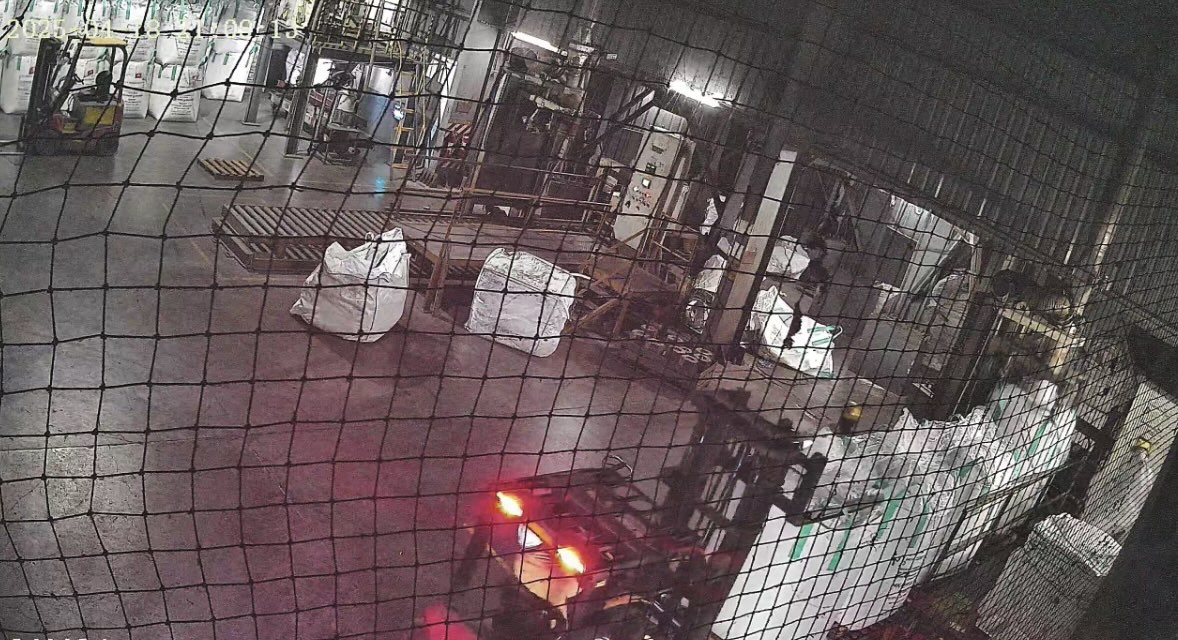
Forklift safety monitoringForklift safety monitoring in action at a loading area
Key Success Factors

Several elements were crucial to the project’s success:

  1. Executive Sponsorship: Strong support from Indorama Ventures’ leadership team
  2. Cross-Functional Involvement: Collaboration between EHS, operations, IT, and employee representatives
  3. Phased Implementation: Gradual rollout allowing for adjustment and learning
  4. Positive Reinforcement: Focus on improvement rather than punishment
  5. Continuous Communication: Regular updates and transparency about system goals
  6. Cultural Integration: Alignment with existing safety programs and values

Client Testimonial

“Visionify’s AI-powered safety monitoring system has transformed how we approach workplace safety at our facility. The real-time insights and comprehensive coverage have allowed us to identify and address safety issues before they become incidents. Beyond the impressive reduction in compliance violations, we’ve seen a fundamental shift in our safety culture. Employees now take greater ownership of safety practices, knowing that consistent monitoring is in place. The system has become an invaluable partner in our commitment to ensuring everyone goes home safely every day.”

— Mr. Ravikant A., EHS Lead.

Technology Overview

Our solution for the client leverages several advanced technologies to provide comprehensive safety monitoring:

Computer Vision AI

  • Custom-trained models for chemical manufacturing environments
  • Multi-class detection for various PPE types and safety violations
  • Adaptive algorithms that function in challenging industrial conditions
  • Continuous learning capabilities to improve over time

Edge Computing Architecture

  • On-premise processing for sensitive operational data
  • Low-latency analysis for real-time safety interventions
  • Distributed processing across strategic facility locations
  • Redundant systems to ensure continuous monitoring

Intelligent Analytics

  • Pattern recognition to identify recurring safety issues
  • Predictive capabilities to anticipate potential hazards
  • Comprehensive reporting for regulatory compliance
  • Actionable insights for safety program improvement

Visionify – Empowering Chemical Manufacturing Safety Through Vision AI

Our comprehensive safety monitoring solution provided the client with powerful tools to transform workplace safety at their facility. Through automated detection, intelligent alerts, and comprehensive analytics, Visionify not only helped reduce compliance violations but also enhanced operational efficiency and safety culture.

The client can now confidently operate their chemical manufacturing processes knowing that safety is being continuously monitored and improved. This successful partnership exemplifies how Visionify’s innovative computer vision solutions can transform industrial safety through advanced AI technology.

Conclusion

This case study demonstrates how AI-powered vision technology can transform safety management in chemical manufacturing environments. By providing continuous monitoring, immediate feedback, and actionable insights, our safety monitoring solution enabled the client’s facility to create a significantly safer workplace while improving operational efficiency.

The success of this implementation has led to discussions about expanding the system to additional facilities globally, with the northern India implementation serving as a model for best practices in AI-enhanced safety management.

Are you facing similar safety challenges in your manufacturing operations? Contact Visionify today to learn how our AI-powered safety monitoring solutions can transform your approach to workplace safety and compliance.

visionify-multi-site-case-study-external-factory-view

How a Multi-Site Industrial Enterprise Leveraged Safety Insights with Visionify’s Safety AI Platform

Key Takeaways

  • Unified Visibility: One centralized dashboard providing real-time safety insights across 5 major facilities in 3 states
  • Significant Safety Improvements: Implementation resulted in a 68% reduction in safety violations and improved PPE compliance from 71% to 92% across all sites
  • Reduced Incidents45% fewer OSHA-reportable incidents following implementation
  • Strong Financial Impact: ₹18.3M saved in potential injury-related costs with a 210% ROI in the first year
  • Rapid Deployment: Complete implementation across all sites in just 6 weeks with no AI retraining required
  • Cultural Transformation: Standardized safety practices and created healthy competition between sites through comparative analytics

Client Profile

Industry: Diversified Industrial Manufacturing
Size: 5 major facilities across 3 states with 5,000+ employees
Operations: Power generation, mining, and heavy manufacturing

Our client is one of India’s largest diversified industrial enterprises with operations spanning power generation, mining, and heavy manufacturing. With a strong commitment to their “Zero Harm” work environment initiative, the organization sought to improve safety visibility and standardize practices across their geographically dispersed operations.

The Challenge

Despite having established safety protocols and dedicated safety officers at each site, the client faced significant challenges in maintaining consistent safety standards across their multiple facilities:

  • Inconsistent PPE Compliance: Compliance varied widely across sites, with some facilities reporting PPE adherence as low as 38%, especially in high-risk departments like welding, electrical maintenance, and chemical handling.
  • Manual Safety Checks: Reliance on manual inspections by safety officers resulted in delayed evaluations and potential human error, limiting the ability to proactively prevent accidents.
  • Siloed Safety Data: Each site operated independent databases for incident logs, PPE audits, and compliance records, preventing comprehensive safety performance insights.
  • Delayed Incident Response: Without real-time detection systems, violations often went unnoticed until after incidents occurred, increasing injury risk and operational downtime.
  • Mounting Regulatory Pressure: Recent industry-wide incidents led to heightened scrutiny from regulatory bodies, demanding more transparent safety reporting and demonstrable compliance.

The Head of Corporate Safety explained: “With operations spread across multiple states, we struggled to maintain visibility into safety practices at all our sites. Each facility operated as its own safety island, making it impossible to standardize enforcement or identify systemic issues. We needed a solution that could bring all our safety data together in real-time while enabling proactive intervention.”

The Solution

After evaluating several options, the client partnered with Visionify to implement our centralized Safety AI Platform across all their facilities:

1. AI-Enabled Detection Systems

  • Strategic deployment of high-definition AI-powered cameras tailored for industrial environments
  • Comprehensive monitoring capabilities including:
    • PPE Detection: Recognition of required protective gear including hard hats, gloves, face shields, high-visibility vests, and fall protection harnesses
    • Occupancy Tracking: Real-time headcount monitoring in confined or high-risk areas
    • Violation Detection: Identification of safety breaches such as unauthorized entry into restricted zones

Easy to use web-application & event management dashboardEasy to use web-application & event management dashboard
2. Unified Dashboard Features

  • Heatmaps: Visual representation of high-risk zones and trends based on violation frequency
  • Visual Sitemaps: Interactive maps linking to camera feeds for a bird’s-eye view of facility layouts and safety status
  • Compliance Comparisons: Benchmarking capabilities across departments, sites, and shifts
  • Live Alerts: Instant notifications via email and mobile apps to designated safety officers when violations occur

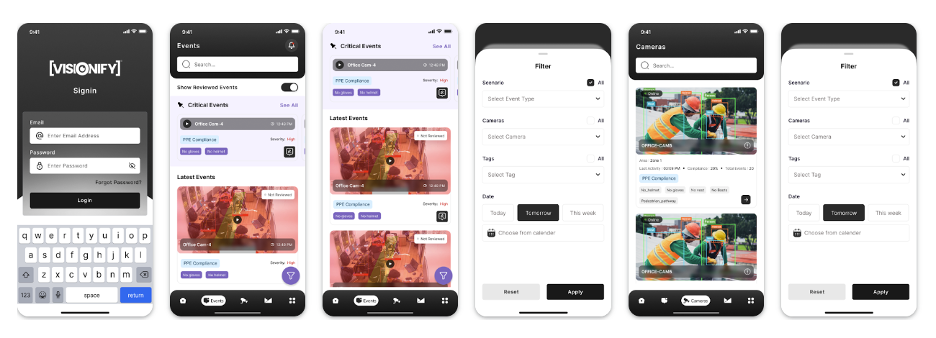
Mobile Safety DashboardMobile Safety Dashboard showing real-time alerts and compliance status
3. Custom Integrations

  • EHS Systems: Seamless integration with existing Environmental Health & Safety software
  • Incident Management: Automatic triggering of investigation and resolution workflows when violations are detected
  • Automated Reporting: Daily compliance summaries and weekly violation trends sent to plant managers and corporate leadership

4. Advanced Analytics

  • Trend Graphs: Weekly and monthly compliance fluctuation analysis
  • Shift-wise Analysis: Identification of training gaps on night and weekend shifts
  • Comparative Analytics: Performance benchmarking across all sites
  • Predictive Safety Modeling: Flagging of potential future risks based on historical patterns

Implementation Process

Visionify followed a scalable and minimally disruptive implementation strategy tailored to industrial environments:

Phase 1: Discovery & Planning (2 Weeks)

  • Site Surveys and Hazard Mapping: Detailed assessments of each plant to identify high-risk zones and potential PPE non-compliance areas
  • Stakeholder Consultations: Interviews with safety officers, operations managers, and corporate leadership to align on KPIs and project goals
  • Infrastructure Design: Optimal camera placement design and network capability verification

Phase 2: Deployment (4 Weeks)

  • Phased installation across all five facilities
  • Integration with existing security and safety systems
  • No retraining required for our out-of-the-box solutions, accelerating deployment timeline
  • User training and system calibration

Results

Within three months of full deployment, the client experienced significant improvements across all safety metrics:

Compliance and Safety Outcomes

  • PPE compliance improved from 71% to 92% across all sites
  • 68% reduction in safety violations
  • 45% fewer OSHA-reportable incidents
  • 100% PPE adherence in highest-risk areas (boiler sections, turbine halls)

Financial Impact

  • ₹18.3M saved in potential injury-related costs
  • 31% drop in insurance premiums
  • 210% ROI in the first year
  • Payback period of under 3 months

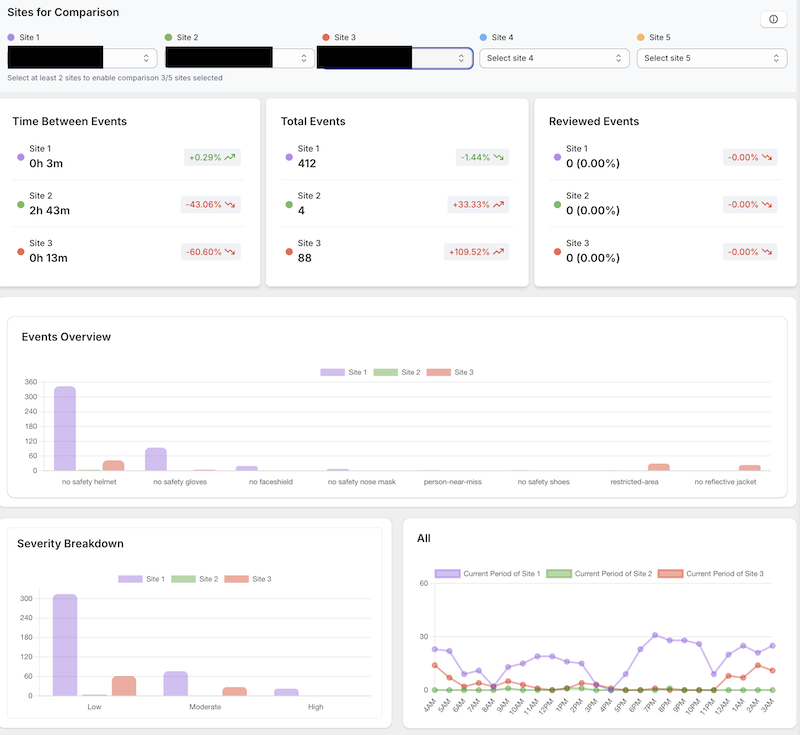
The unified dashboard enabled the client to track safety improvements across all sites, revealing consistent positive trends:

Comparative Analytics Dashboard & Safety TrendsComparative analytics showing safety performance across different sites
The data clearly demonstrated that sites with initially lower compliance rates showed the most dramatic improvements, eventually converging toward a uniformly high standard across the enterprise.

Implementation Challenges & Solutions

The multi-site implementation presented several unique challenges:

  1. Varying Infrastructure Conditions
    • Challenge: Different sites had varying levels of network infrastructure and camera compatibility
    • Solution: Deployment of edge computing devices at sites with limited connectivity and adaptive camera integration strategies
  2. Diverse Operational Requirements
    • Challenge: Each site had unique safety requirements based on their specific operations
    • Solution: Configurable detection parameters and zone-specific rule sets tailored to each facility’s needs
  3. Change Management
    • Challenge: Resistance from some site managers concerned about comparative performance metrics
    • Solution: Emphasis on improvement rather than criticism, with recognition programs for most-improved sites
  4. Data Standardization
    • Challenge: Inconsistent safety terminology and metrics across sites
    • Solution: Implementation of standardized safety taxonomy and unified reporting framework

Key Success Factors

Several elements were crucial to the project’s success:

  1. Executive Sponsorship: Strong support from the corporate leadership team
  2. Unified Implementation Team: Cross-functional team with representatives from each site
  3. Phased Rollout: Gradual implementation starting with highest-risk areas
  4. Transparent Communication: Clear messaging about the system’s purpose and benefits
  5. Continuous Feedback Loop: Regular system refinements based on user input
  6. Competitive Gamification: Monthly safety performance recognition program

Client Testimonial

“Visionify’s Safety AI Platform has transformed how we manage safety across our diverse operations. For the first time, we have complete visibility into safety practices at all our sites through a single dashboard. The real-time alerts and predictive analytics have allowed us to intervene before incidents occur, while the comparative data has created healthy competition between facilities. Beyond the impressive reduction in violations and incidents, we’ve seen a fundamental shift in our safety culture. The ROI has exceeded our expectations, making this one of our most successful safety initiatives to date.”

— Rajiv S., Corporate Head of Safety & Compliance

Technology Overview

Our Safety AI Platform leverages several advanced technologies to provide comprehensive safety monitoring across multiple sites:

Computer Vision AI

  • Multi-class detection models optimized for industrial environments
  • Transfer learning capabilities to adapt to site-specific conditions
  • High accuracy in challenging lighting and environmental conditions
  • Privacy-preserving processing that focuses on violations, not individuals

Scalable Architecture

  • Cloud-based dashboard with edge computing for local processing
  • Bandwidth-efficient data transmission focusing on events rather than continuous video
  • Redundant systems ensuring 99.9% uptime
  • Enterprise-grade security with end-to-end encryption

Intelligent Analytics Engine

  • Cross-site pattern recognition to identify systemic issues
  • Anomaly detection to flag unusual safety behaviors
  • Predictive modeling to anticipate potential safety hotspots
  • Automated report generation for regulatory compliance

Looking Ahead: Scaling Success Further

Encouraged by the success at their core industrial sites, the client is now planning to expand the deployment to:

  • Logistics and supply chain operations
  • Warehouse safety management
  • Integration with air quality and fire detection systems
  • Introduction of AI-driven behavior analysis tools

Visionify – Unifying Safety Intelligence Across Industrial Enterprises

Our Safety AI Platform provided the client with a powerful tool to transform safety management across their geographically dispersed operations. Through unified monitoring, real-time alerts, and comprehensive analytics, Visionify not only helped reduce safety violations but also standardized practices and fostered a culture of continuous improvement.

The client can now confidently manage safety across all their sites with complete visibility and proactive capabilities. This successful partnership demonstrates how Visionify’s innovative computer vision solutions can transform industrial safety at scale through advanced AI technology.

From Data to Action

Conclusion

This case study demonstrates how AI-powered vision technology can unify safety management across multiple industrial sites. By providing a centralized dashboard with real-time monitoring, immediate alerts, and actionable insights, our Safety AI Platform enabled the client to create significantly safer workplaces while improving operational efficiency.

The success of this implementation has positioned the client as a safety leader in their industry, with plans to expand the system to additional operational areas. For enterprises looking to bring all their sites under one intelligent safety umbrella, Visionify proves that one dashboard can drive many wins.

Are you facing similar challenges in managing safety across multiple facilities? Contact Visionify today to learn how our Safety AI Platform can transform your approach to enterprise-wide safety management.

visionify-chemical-plant-case-study-exterior

From Reactive to Proactive Safety – How a Chemical Plant Streamlined Workplace Safety using AI in 2026

Key Takeaways

  • Rapid Transformation: Shifted from reactive to proactive safety management in just 2 weeks
  • No Hardware Investment: Leveraged existing CCTV infrastructure without expensive upgrades
  • Significant Safety Improvements48% decrease in near-miss incidents and 65% faster hazard response times
  • Enhanced Visibility: Over 90% of all incidents in deployed areas automatically logged and reviewed
  • Comprehensive Coverage: Implemented 20+ AI safety scenarios addressing specific operational risks
  • Real-Time Intervention: Integrated alert system with mobile notifications and on-site alarms

Client Profile

Industry: Chemical Manufacturing
Size: 2,500+ employees across multiple facilities in Texas, USA
Operations: Production of industrial solvents, adhesives, specialty coatings, and chemical products

Our client is a major player in the specialized chemicals manufacturing sector with inherently high-risk operations. Despite maintaining a strong compliance track record and significant investments in employee training, they recognized that traditional safety measures were insufficient to address emerging operational challenges and risks.

The Challenge

Before implementing Vision AI solutions, the client operated with a risk management system that responded only after incidents occurred. Several systemic challenges were apparent:

  • Delayed Incident Detection: Critical incidents like chemical leaks, PPE violations, and near-miss accidents often became apparent only after escalation, causing severe operational and safety consequences
  • Manual Monitoring Limitations: The complex operational environment exceeded the capabilities of human surveillance teams, making it impossible for dedicated safety personnel to effectively monitor the entire operation
  • Static CCTV Systems: Despite having a vast network of CCTV cameras, their surveillance capabilities remained passive—recording footage but providing no real-time risk analytics
  • Unfulfilled Requirements: Off-the-shelf safety analytics software couldn’t address the complex and diverse risk scenarios unique to chemical manufacturing, from specialized chemical handling to equipment management

The EHS Director explained: “We had invested heavily in traditional safety protocols, but our ability to prevent incidents rather than react to them was severely limited. We were data-rich but insight-poor, with thousands of hours of surveillance footage that wasn’t actively helping us identify risks before they became incidents.”

The Solution

After evaluating several workplace safety technology providers, the client partnered with Visionify for their comprehensive Vision AI platform:

1. Out-of-Box AI Scenarios

  • Modular, flexible platform with 20+ specialized AI applications
  • Each application designed to address specific workplace safety challenges
  • Customizable detection parameters for chemical industry-specific risks
  • All of Visionify’s scenarios can be found at this link: Visionify AI Scenarios.

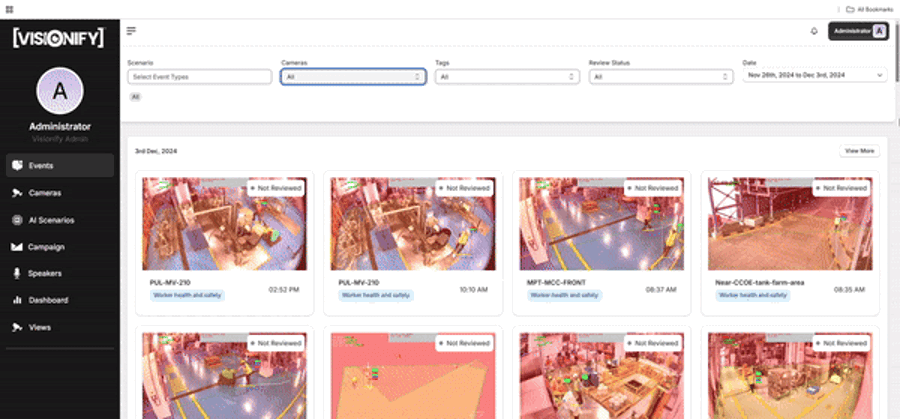
Reactive to Proactive Safety AI Safety Scenario DashboardIntuitive dashboard showing multiple active safety scenarios
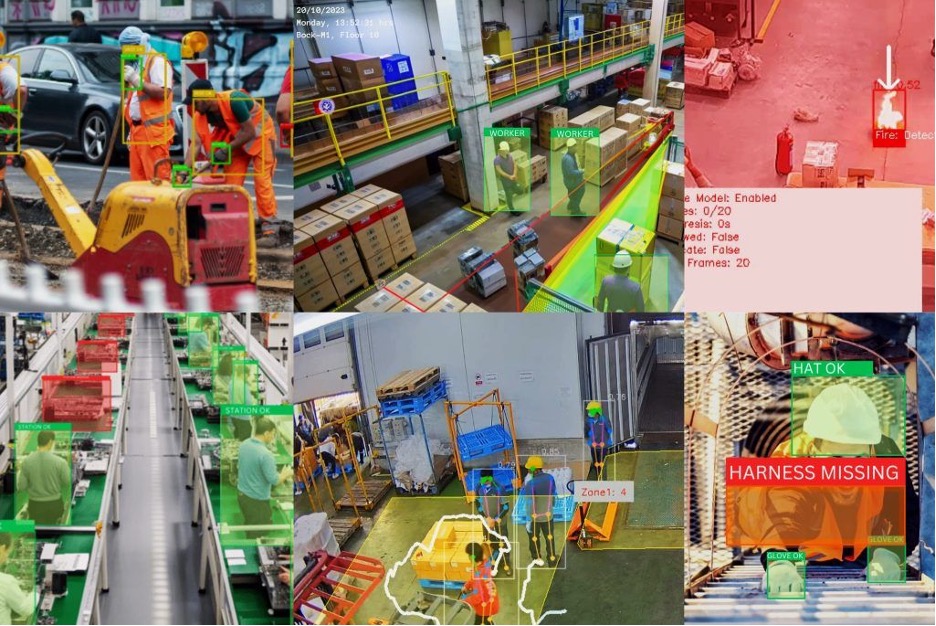
2. Seamless Integration

  • Direct connection to existing CCTV infrastructure
  • No additional hardware investments required
  • Preserved existing security investments while adding intelligent analytics

3. Deployed Vision AI Scenarios

  • PPE Detection: Real-time monitoring to ensure compliance with critical PPE requirements including gloves, helmets, respirators, and face shields
  • Restricted Area Monitoring: Identification and alerting of unauthorized access to confined spaces and other high-risk zones
  • Forklift Safety Monitoring: Detection of unsafe proximity between workers and moving forklifts
  • Occupancy Monitoring: Tracking the number of individuals in sensitive areas to prevent overcrowding

Reactive to Proactive Safety Mobile Alert SystemMobile safety alerts showing real-time violations and response options

4. Real-Time Alert System

  • Automated Mobile Alerts: Safety officers receive instant notifications about risks directly on smartphones and wearable devices
  • Integrated Audio Alarms: Floor-level buzzers and audio alarms connected to the detection system for immediate on-ground intervention
  • Closed-Loop Response: Complete system from detection to intervention that helps mitigate incidents in real time

Implementation Process

Visionify completed the entire deployment within a remarkably short timeframe:

Phase 1: Assessment & Planning (3 Days)

  • Site Survey: Comprehensive evaluation of existing camera infrastructure and operational risk zones
  • Use Case Prioritization: Collaborative workshops with EHS teams to identify highest-impact safety scenarios
  • Integration Planning: Technical assessment of network capabilities and alert system requirements

Phase 2: Deployment (11 Days)

  • Rapid configuration of AI models for selected safety scenarios
  • Integration with existing camera infrastructure
  • Connection to alert systems (mobile and on-site)
  • User training and system validation

Results

Within just one month of deployment, the client experienced significant improvements in safety metrics:

Safety Outcomes

  • 48% Decrease in Near-Miss Incidents: Real-time alerts and early intervention proved critical in preventing incidents before escalation
  • 65% Faster Hazard Response Time: Automated alerts empowered teams to act swiftly when seconds mattered
  • Improved Incident Reporting: Over 90% of all incidents in deployed areas automatically logged and reviewed
  • Increased Visibility: Total recorded incidents rose by 120% in the first 2 weeks as previously unnoticed safety issues were captured

Operational Impact

  • Reduction in Safety Audit Time: 40% less time spent on manual safety inspections
  • Decreased Operational Disruptions: 35% fewer emergency shutdowns due to safety concerns
  • Enhanced Regulatory Compliance: Comprehensive documentation of safety initiatives and incident prevention
  • Improved Employee Confidence: 87% of surveyed employees reported feeling safer in the workplace

Analytics and Insights

The Vision AI platform provided unprecedented visibility into safety trends:

Reactive to Proactive Safety AI Scenarios AppliedComprehensive AI Scenarios for PPE Compliance, Area Controls, Vehicle Controls to keep the site safe

The data revealed several surprising insights:

  1. Time-of-Day Patterns: 70% of PPE compliance issues occurred during shift transitions
  2. Location-Specific Risks: Certain production areas consistently showed higher incident rates
  3. Process Correlation: Specific manufacturing processes had stronger associations with safety violations
  4. Behavioral Indicators: Early warning signs that often preceded more serious incidents

Implementation Challenges & Solutions

The deployment faced several unique challenges in the chemical manufacturing environment:

  1. Hazardous Area Monitoring
    • Challenge: Camera placement in areas with potentially explosive atmospheres
    • Solution: Utilization of existing intrinsically safe camera infrastructure with remote processing
  2. Integration with Legacy Systems
    • Challenge: Connecting with older security and EHS management systems
    • Solution: Development of custom API connectors and middleware solutions
  3. Alert Fatigue Concerns
    • Challenge: Worry that too many alerts would lead to desensitization
    • Solution: Implementation of tiered alert system with severity-based notifications
  4. Privacy Considerations
    • Challenge: Employee concerns about constant monitoring
    • Solution: Focus on violation detection rather than individual tracking, with clear communication about system purpose

Key Success Factors

Several elements contributed significantly to the project’s success:

  1. Rapid Deployment: Quick implementation maintained momentum and stakeholder enthusiasm
  2. No Hardware Requirements: Leveraging existing infrastructure minimized disruption and costs
  3. Flexible Configuration: Ability to adjust detection parameters to match specific operational needs
  4. Integrated Alerts: Direct connection to intervention systems created immediate value
  5. Collaborative Approach: Close partnership between Visionify and the client’s EHS team

Client Testimonial

“Visionify’s Vision AI platform has fundamentally transformed our approach to workplace safety. In just two weeks, we evolved from a reactive model where we’d investigate incidents after they occurred to a proactive system that helps us prevent them entirely. The ability to leverage our existing camera infrastructure meant we could implement quickly without capital expenditure, while the immediate alerts have dramatically reduced our response times. Most importantly, our employees feel the difference—they know hazards will be detected and addressed promptly, creating a much stronger safety culture throughout our operation.”

— Michael T., EHS Director

Technology Overview

The Vision AI platform deployed at the client site leverages several advanced technologies:

Computer Vision AI

  • Deep learning models optimized for industrial safety detection
  • Edge + cloud processing architecture for reliable performance
  • High accuracy even in challenging industrial lighting conditions
  • Continuous learning capability to improve detection over time

Alert Integration Framework

  • Multi-channel notification system (mobile, email, on-site alarms)
  • Prioritization algorithms to prevent alert fatigue
  • Two-way communication for alert acknowledgment and resolution
  • Automated escalation for unaddressed critical alerts

Analytics Engine

  • Trend identification across multiple safety parameters
  • Correlation analysis between operational factors and safety incidents
  • Customizable reporting for different stakeholder needs
  • Predictive analytics to identify emerging risk patterns

Looking Ahead: Future Expansion

Building on the success of the initial deployment, the client is planning several expansions:

  • Integration with process control systems for automated safety interventions
  • Deployment of additional AI scenarios including slip/fall detection and chemical leak identification
  • Extension to additional facilities nationwide
  • Development of predictive risk models based on collected data

Visionify: Revolutionizing Chemical Industry Safety

Our Vision AI platform provided the client with a transformative approach to workplace safety—moving from reactive incident management to proactive risk prevention. By leveraging existing infrastructure and implementing targeted AI scenarios, Visionify delivered immediate value without disrupting operations.

The client now has unprecedented visibility into safety risks across their operation, with the ability to intervene before incidents occur. This successful partnership demonstrates how Visionify’s innovative computer vision solutions can address the unique safety challenges of high-risk chemical manufacturing environments.

Conclusion

This case study illustrates the power of Vision AI to transform safety management in high-risk industrial environments. By providing real-time detection, immediate alerts, and actionable insights, our platform enabled the client to create a significantly safer workplace while improving operational efficiency.

The success of this implementation has positioned the client as a safety innovation leader in the chemical industry, with plans to expand the system to additional facilities. For chemical manufacturers looking to move beyond traditional safety approaches, Visionify proves that AI-powered vision technology can deliver rapid, meaningful improvements without requiring extensive infrastructure investments.

Are you facing similar challenges in managing safety in high-risk environments? Contact Visionify today to learn how our Vision AI platform can transform your approach to workplace safety management.