Author: dennis.brouwer

SPM-Logo-Vertical-2

A Supply Chain Hero: Tanya Lance Drives Smarter Supply Chain Strategies at SPM

Our Supply Chain Heroes program recognizes and celebrates the hard work of LeanDNA customers who optimize inventory, reduce shortages, and empower their companies to operate more efficiently. Every hero has a story, and we’re here to tell them.

For Tanya Lance, Materials Manager at Special Products & MFG (SPM), driving efficiency and innovation has always been about finding better ways to empower her team. In the fast-paced world of precision manufacturing, she recognized that the company’s existing tools were creating more complexity than clarity.

Tackling Challenges Head-On

The team’s ERP system generated massive amounts of data, but translating that into actionable insights was a challenge. Buyers relied on ERP reports, spreadsheets, and supplier feedback. These methods lacked consistency and failed to account for different commodity types that required unique buying strategies. Without reliable visibility into metrics like min/max levels or supplier performance, the team was stuck in reactive execution rather than proactive improvement.

Before LeanDNA, Tanya and the team tried to bridge these gaps by developing custom SQL and PowerBI dashboards. While helpful in the short term, these tools required significant internal resources to maintain and rebuild for each new analysis. Lacking AI-driven insights, the team couldn’t proactively identify operational  improvements.

Shifting to a Smarter Solution

Recognizing the need for a smarter approach, Tanya and the team chose to implement LeanDNA and quickly began to see measurable results.

“We can now identify potential shortages well in advance, enabling smarter purchasing decisions and better resource planning.” -Tanya Lance, Materials Manager at SPM

SPM saw improvements in Clear-to-build percentages and PO confirmations, and min/max inventory management became far more accurate. More importantly, the team had clearly defined, actionable tasks that free them from constant firefighting.

“In recent months, we have reduced shortages, improved supplier on-time delivery, and reallocated buyer time toward strategic initiatives. These improvements have not only enhanced day-to-day efficiency but also created opportunities to focus more on cost savings and supplier development.”

Building Toward the Future

Tanya and the SPM team are already looking to the future. Their next priority is leveraging LeanDNA’s AI-driven min/max recommendations to further refine inventory strategies. They plan to start comparing current min/max settings with LeanDNA-generated insights and factoring in practical considerations like lot sizing, skid quantities, and minimum order values. They are working toward a balanced approach that improves inventory accuracy without compromising on-time delivery or inventory turns.

For Tanya, the journey has reinforced one key lesson:

“One of the most valuable lessons we’ve learned is that solving supply chain challenges doesn’t always require additional headcount. It requires smarter processes and better tools.”

By directing her buyers toward actionable tasks through LeanDNA, Tanya has created opportunities for cross-training, cost reduction initiatives, and more meaningful supplier performance conversations. This shift has allowed her team to move beyond reactive PO follow-up and focus on activities that drive long-term success.

A Tip From the Hero

When asked what she would share with other supply chain leaders, Tanya points to the importance of embracing intelligent solutions.

“Intelligent supply chain solutions like LeanDNA, with built-in AI analysis, elevate procurement beyond simply supplying materials; they enable proactive, strategic decision-making.”

Through her vision and leadership, Tanya has turned challenges into opportunities for SPM. By championing LeanDNA and shifting her team toward proactive, value-added work, she’s demonstrating how one supply chain leader can create lasting impact, not only for her team, but for suppliers and customers alike.

DAIKIN_logo.svg

Supply Chain Heroes: Turning Visibility into Business Value at Daikin

At Daikin our Supply Chain Heroes program recognizes and celebrates the hard work of LeanDNA customers who optimize inventory, reduce shortages, and empower their companies to operate more efficiently. Every hero has a story, and we’re here to tell them.

Supply chain leaders today are balancing the pressure to reduce costs, improve efficiency, and build resilience all while maintaining operational excellence. Nicolas Moreno-Cely, Senior Director of Materials Planning and Operational Excellence and Homero Garza, Procurement Manager at Daikin, are leading this transformation by driving smarter decision-making, increasing visibility, and empowering teams to take faster action with LeanDNA.

Gaining Control with Visibility 

Before implementing APEX by LeanDNA, Nicolas and Homero faced a common challenge: a lack of visibility into inventory performance and no clear, actionable roadmap to reach target levels. The time it took to analyze data prevented them from any quick action. 

“Filtering noise in exception messages to identify what really mattered was difficult. We had plenty of data, but not enough clarity or prioritization to translate that data into meaningful action.” -Nicolas Moreno-Cely, Senior Director of Materials Planning and Operational Excellence at Daikin

The team initially turned to manual methods, relying on spreadsheets and early ERP implementation efforts to bring order to the process. While those efforts provided a temporary structure, they needed to find a long term solution. 

“They were partially successful,” said Nicolas. “The ERP implementation was still in progress, and LeanDNA accelerated that transformation by highlighting the key pain points.”

Accelerating Transformation with Smarter Workflows

Since adopting APEX by LeanDNA, the Daikin team has already achieved impressive results. Inventory levels have dropped by more than 10%. 

“It’s still early on, but inventory levels have dropped by 10+% while gaining operational efficiency through buyers’ collaboration.” 

Beyond an inventory reduction, on time PO placing has improved and impacted the production line. 

“Production lines have noticeably improved. Now any impact  we have in the production line is due to supplier performance issues and not due to opportunities on our processes.” -Homero Garza, Procurement Manager at Daikin.

A major catalyst in that early success has been the use of workflows in APEX Procurement Management, which have helped the team standardize and streamline their processes. Instead of buyers sifting through manual spreadsheets to make buying decisions, they have prioritized actions that allow them to focus on the highest impact decision first.

The result: a more efficient, agile, and aligned supply chain organization, where buyers can focus on high-value actions that move the business forward.

Looking Ahead: Driving Supplier Collaboration 

As Daikin continues its journey toward operational excellence, the next phase of Nicolas and Homero’s strategy is centered around improving communication with suppliers to further optimize production flow and making smarter decisions regarding inventory policies. 

“Increasing supplier collaboration is our next big opportunity,” Nicolas said. “We’re focusing on enhancing forecasting frameworks, incorporating advanced PFEP capabilities from APEX, and ensuring operational excellence through Supplier Connect.”

By connecting supplier performance directly to materials planning insights, the team aims to strengthen relationships, improve reliability, and reduce disruptions.

A Tip from the Heroes: Measuring What Matters Two Levels Up

With a career dedicated to improving operations and empowering teams, Nicolas and Homero have learned that successful transformation isn’t just about metrics, it’s about measuring what matters most.

“As people who are obsessed with measuring everything, focusing on metrics that matter two levels up can make the difference between adoption or project failure.”

That philosophy has become a key part of their strategy. Instead of tracking performance solely through supply chain KPIs like inventory turns or shortage reduction, the team now anchors their success to broader business outcomes such as working capital optimization, production throughput, and on-time delivery to customers.

By connecting supply chain metrics to business goals, Nicolas and Homero have created a stronger line of sight between day-to-day execution and overall business performance. This alignment not only drives better decision-making but also helps elevate the supply chain’s strategic importance within the organization.

Nicolas, Homero, and the Daikin team are building a stronger foundation for the future where visibility drives confidence, collaboration fuels performance, and every decision moves the business closer to operational excellence.

“Bringing a new platform into your process is not always easy, but having a weak foundation in your data and processes can kill your business. Embrace the rapid change in which the world is adopting new technologies.”

Safran_-_logo_2016

A Supply Chain Hero: Mohamed Abarghaz’s 6-Factory Sprint to Standardized Excellence at Safran Electrical & Power

Our Supply Chain Hero program recognizes and celebrates the hard work of LeanDNA customers who optimize inventory, reduce shortages, and empower their companies to operate more efficiently. Every hero has a story, and we’re here to tell them.

Meet our latest Supply Chain Hero, Mohamed Abarghaz, Supply Chain Project Manager at Safran Electrical & Power. Mohamed is a true expert in business processes and SAP who has become a champion for standardized excellence within his organization. Known for his calm, supportive nature, Mohamed has gone above and beyond to ensure his teams have the tools and training they need to succeed.

Overcoming Manual Reporting and Data Silos

To better support the procurement teams and optimize inventory management, Safran deployed several Power BI tools. However, developing dashboards tailored to the specific needs of schedulers and planners proved challenging, mainly due to the large volume of data being processed. Given the ongoing global supply chain pressures, the support functions (Program, Industrial Brand, Purchasing, etc.) have been—and remain—particularly demanding when it comes to information, analysis, KPIs, and reporting. This situation increased the workload for the procurement teams and sometimes made communication between the various stakeholders more difficult. To address these challenges, Safran sought a solution that would provide greater fluidity, better management of large data volumes, and enhanced visibility across all departments.

Driving Impact Through Rapid Implementation

The Safran Electrical and Power team decided to implement APEX by LeanDNA, an AI-enabled supply planning and inventory optimization solution. Mohamed demonstrated exceptional change management skills by successfully managing the deployment of APEX across his entire division. He implemented the new system in six factories in the span of just one year. He personally visited every site to lead data validation and training, spending hours supporting the teams on the ground.

The results of this dedication are clear. By leveraging APEX, Safran has achieved:

  • Improved Visibility: Teams now have access to real-time dashboards for shortages, excess, and obsoletes.
  • Reduced Analysis Time: Automation has replaced manual Excel work, allowing for faster decision-making.
  • Stronger Collaboration: Communication between different supply chain roles has been strengthened through a unified platform.
  • Standardized Processes: The deployment led to improved action tracking and more efficient workflows across the division.

“LeanDNA has improved visibility and reduced analysis time. Teams now access real-time dashboards for shortages, excess and obsoletes, and action tracking. Collaboration between supply chain roles has strengthened.” — Mohamed Abarghaz, Supply Chain Project Manager at Safran Electrical & Power

Building a Foundation of Data Quality

As Mohamed looks toward the next six months, his goals are focused on continuous improvement. He plans to further reduce shortages and lower excess inventory by expanding LeanDNA usage and improving SAP data quality. By utilizing weekly dashboards and monthly performance reviews, he aims to standardize workflows and ensure long-term success.

For Mohamed, the most valuable lesson he has learned is the critical link between data and performance.

“High quality data and strong visibility are essential for effective supply chain performance. With standardized processes and accurate information, teams can anticipate issues, prevent shortages, reduce excess, and make faster, more informed decisions.”

A Tip From the Hero

When asked what advice he would give to other supply chain professionals, Mohamed emphasizes that while technology is a powerful enabler, it must be paired with strong fundamentals.

“LeanDNA is a tool that helps reduce analysis time, support faster decision-making, and improve collaboration. However, the core work must still be performed in our ERP system to ensure strong data quality.  LeanDNA delivers its full value when the data in the ERP is reliable, accurate, and consistently maintained.”

Mohamed’s expertise and his phenomenal support for Safran users make him a standout leader in the field. His commitment to training others and his mastery of both SAP and LeanDNA continue to drive meaningful transformation for his company.

Shriji_pharmaceutical

How Shriji Enhanced Pharma Bottle Cap Quality with Jidoka’s AI-Powered Smart Inspection

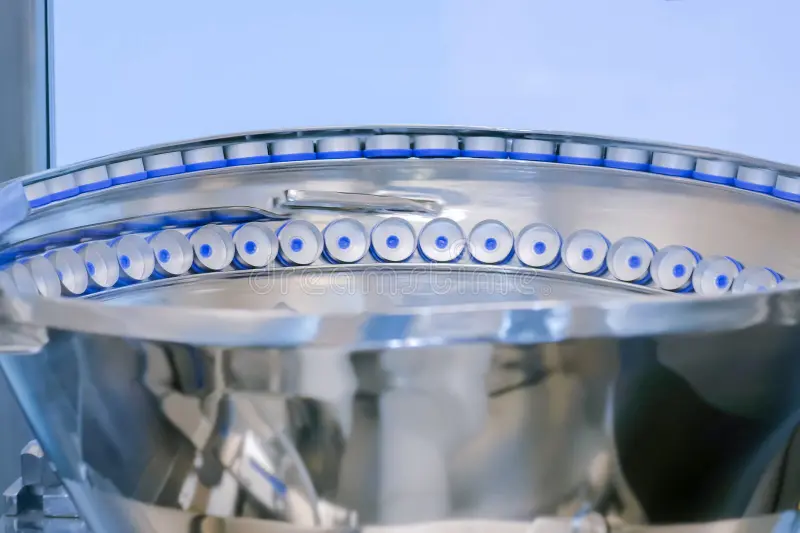
Using Jidoka’s AiI Visual Inspection Systems, Shriji Enhanced Pharma automated defect detection for bottle caps on its wad assembly line—achieving real-time inspection speeds of 800+ parts per minute, reducing scrap , rework costs by over $10,000 annually.

Overview 

Shriji Enhanced Pharma is a global leader in pharma-grade plasticpackaging solutions, manufacturing high-precision bottle caps that demand stringent visual quality standards. Each cap must be free from surfaceanomalies and assembly defects to ensure sealing integrity and pharmaceuticalcompliance.

However, with over 1 million bottle caps to inspect daily, manual or semi-automated inspection methods struggled to maintain both throughput and consistency. Delayed defect feedback led to unnecessary rework and high rejection rates. Shriji needed a high-speed, reliable, and traceable inspection system capable of handling massive production volumes without slowing down the line.‍

Opportunity 

Manual inspection and legacy systems couldn’t keep pace with Shriji’s high-volume bottle cap production:

  • Over 1 million caps produced dailymade 100% manual inspection impractical.
  • Minute defects such as sealingdamage, contamination, or surface irregularities often went undetected.
  • Delayed feedback on rejections led to higher scrap, rework, and wasted production time.
  • Even a small batch of undetected defects could result in costly product rejections and customer dissatisfaction.

Jidoka’s Approach

Shriji Enhanced Pharma
Lid integrity inspection
  • High-Speed Single-Camera Inspection Architecture
    A single high-resolution top camera captures both the top and inner surfaces of each bottle cap as they move on Shriji’s existing conveyor automation line. 
  • EdgeAI–Enabled Defect Detection
    Jidoka’s proprietary Kompassdeep-learning engine runs inference on captured images in less than 100 milliseconds, identifying and classifying defects in real time with high precision.
  • Automated Decision and Ejection
    The system delivers immediate OK/NG decisions, directly linked to an automatic pneumatic rejection mechanism that removes defective caps from the line instantly—eliminating lag between detection and response.
  • Smart Traceability and Alerts
    Each inspection result is logged and visualized on a digital dashboard. Operator alerts notify of recurring defect trends, enabling proactive maintenance and data-driven process improvement.

Big Wins 

Major Outcomes for Shriji

800+ Parts/Minute

Achieved high-speed inspection without throughput loss.

$10K Annual Cost Savings

Reduced rework and scrap losses.

10% Reduction in Defect Occurrence

Continuous feedback loop drives improvement.‍

ROI Achieved in 18 Months

Fastpayback through efficiency and quality gains.

With Jidoka’s AI-powered smart inspection system, Shriji successfully transformed its bottle cap quality assurance process. Th eEdge AI solution delivered high-speed, real-time defect detection with unmatched consistency, traceability, and accuracy—reducing scrap, preventing defect carryover, and strengthening overall manufacturing reliability. This deployment marks a key milestone in Shriji’s journey toward fully automated, data-driven quality control in pharma packaging.

NSK_Bearings

How NSK Bearings Achieved Reliable 360° Bearing Inspection with Jidoka

Using Jidoka’s AI-Powered smart vision inspection infrastructure, NSK Bearings automated 360° bearing inspection—reducing false positives, improving accuracy, and enabling high-speed inspection across 18 SKUs within a single compact station.

NSK Bearings NSK-Logo

Overview

NSK Bearing is a leading manufacturer of precision bearings catering to automotive and industrial applications. The production involves multiple SKUs each requiring a flawless surface finish and strict dimensional accuracy.

However, manual visual inspection posed significant challenges. Operators struggled to maintain consistency while inspecting high volumes, leading to undetected surface defects, high false positives, and reduced throughput. The need for a reliable, automated 360° inspection became essential to maintain quality, reduce human dependency, and support future production automation initiatives.

Opportunity

Ensuring defect-free bearing surfaces across multiple product variants presented unique challenges:

  • Required complete 360° inspection including Inner diameter surface and outer diameter surface within a compact station footprint.
  • Needed to accommodate 18 part SKUs at a common hardware setup.
  • Aimed to achieve faster inspection cycles (<10 seconds per part) to align with production takt times.
  • Enable traceability and defect highlighting for operator review and continuous improvement.

Jidoka’s Approach

• 360° Imaging with Triple-Camera Architecture

The bearing is loaded using a precision grip fixture designed to hold and place each variant securely. Three industrial cameras capture all critical surfaces:

  • Top camera images the top face.
  • Camera 2 captures the inner diameter as the part rotates 360°.
  • Camera 3 captures continuous images of the outer diameter during the same rotation.

• Bottom-Face Inspection

Once top, ID and OD imaging are complete, the part is automatically flipped within the same station. The top camera then captures the bottom surface to ensure full-surface coverage.

• AI-Driven Defect Detection

Captured images are processed through Jidoka’s deep-learning Kompass engine, which classifies each bearing as OK or Not OK within 6 seconds. The system identifies common machining and surface defects such as dents, scratches, tool marks, or unwashed areas with 98% accuracy.

• Automated Decision and Handling

  • Good parts are transferred to the linear conveyor for downstream operations.
  • Defective parts are automatically removed via a pneumatic     push rejection mechanism, ensuring seamless separation without disrupting the flow

• Smart Analytics & Visualization

Each inspection result is logged with visual defect highlights, enabling operator review, trend analysis, and traceability.‍

Big Wins

Shared vision, remarkable results:

98%Accuracy

Reliable identification of surface defects across all bearing regions.

<0.5%False Positives

Massive reduction from legacy manual systems (>10%).

7,000+Bearings Inspected Daily

High throughput achieved within a 10-second cycle time.‍

Compact Station (700 × 700 mm)

Optimized footprint enabling easy line integration.

‍With Jidoka’s Kompass-powered inspection solution, NSK Bearings achieved a fully automated 360° bearing inspection process that combines precision, speed and scalability. The transformation delivered 98% defect detection accuracy, minimized false positives and enhanced overall product reliability—ultimately strengthening customer trust and paving the way for future factory automation.

im gear- bevel gear

How IM Gears Ensured 360° Defect-Free Bevel Gears with Jidoka’s AI-Powered Vision Inspection Infrastructure 

Jidoka’s AI vision system detects critical visual defects in bevel gears, ensuring zero market escapes, reducing costs and providing reliable inspection with 99.5% accuracy.

IM Gears

Overview

IM Gears, a $30 million high-precision manufacturer of automotive, hydraulics, and aerospace components, specializes in producing critical bevel gears that demand flawless quality to ensure mechanical performance and reliability.

As production volumes increased—reaching up to 10,000 units per day—the company faced significant challenges with traditional manual inspection methods.‍

Opportunity‍

Ensuring defect-free bevel gears while maintaining throughput demands a comprehensive, automated solution:

  • Full 360° inspection of gears, covering internal and external geometries.
  • High-speed inspection to meet production targets without compromising accuracy.
  • Consistent marking of accepted parts for seamless sorting.
  • Data-driven insights for shifting from defect detection to defect prevention.

Jidoka’s Approach

  • Multi-Station Camera Setup
    The multi-station inspection system provides end-to-end quality control by automatically loading, flipping, and precisely checking the part’s top, bottom, inner, and outer diameters.
  • Deep Learning-Based Defect Detection
    Advanced object detection algorithms identify a wide range of visual defects, including:
    •   Face burrs, sphere damage, rust, tool marks, white phosphating marks, dents, broach issues, and more.
    •   Dimensions such as outer diameter are verified against tolerances of ±1 mm.
  • Automated Marking & Sorting
    Accepted parts are automatically marked with a green identification dot for seamless sorting,  and undergoes oiling treatment, reducing manual handling and human error. 
  •  Data-Driven Quality Insights
    The system captures and analyses 30+ images per part, enabling root-cause analysis and preventive measures, rather than reactive detection.

Big Wins

Key achievements driving business excellence

$32KCost Savings

Reduces inspection labour costs and eliminates recalls

99.5%Accuracy

Reliable detection of 15+ defect classes

10% Improvement Over Manual Inspection

Enhances overall throughput and reliability.

‍Automated, Fatigue-Free Inspection

Supports end-to-end inspection without manual intervention.

‍With Jidoka’s AI-powered vision inspection system, manufacturers can ensure defect-free bevel gears, protect brand reputation and maintain high-quality standards. The solution enables precise 360° inspection, data-driven insights and efficient sorting, setting a new benchmark for automated gear inspection in high-volume manufacturing.

avon_seals_pvt_ltd_cover

How Avon Seals Achieved High-Speed Dual-Face Seal Inspection with Jidoka

Using Jidoka’s AI-driven Eagle-Eye vision inspection system, Avon Seals automated quality checks for carbon and ceramic seals across 28+ variants — boosting defect detection by 40% and enabling 120 PPM dual-face inspection with full traceability.

Avon Seals

Overview

Avon Seals Pvt. Ltd. is one of India’s largest manufacturers of mechanical seals for agricultural, domestic, and automotive water pumps. Their products support leading OEMs in India, Europe, and the USA — making consistent quality and reliability non-negotiable.

Manual dual-face inspection led to missed micro-defects, fatigue-driven inconsistency, and alack of traceability. As production demand grew, Avon Seals required a more reliable and scalable quality solution — prompting the shift to Jidoka’s automated inspection. 

Opportunity

Scaling to 100% automated quality inspection required solving several challenges:

  • Inspect top and bottom faces within a single continuous flow
  • Support 28 product variants (color, diameter 20–40 mm, surface finish differences)
  • Detect micro-defects as small as 0.3 mm
  • Maintain 120 parts per minute throughput

Jidoka’s Approach

  • Dual-Face AI Vision Inspection
    • Two synchronized cameras inspect the seal’s top and bottom faces.
    • Station-1 captures top-face images using custom precision illumination, while Station-2 inspects the bottom face after anon-stop automated flipping mechanism rotates each seal in motion.
  • High-Accuracy Defect Detection & Classification
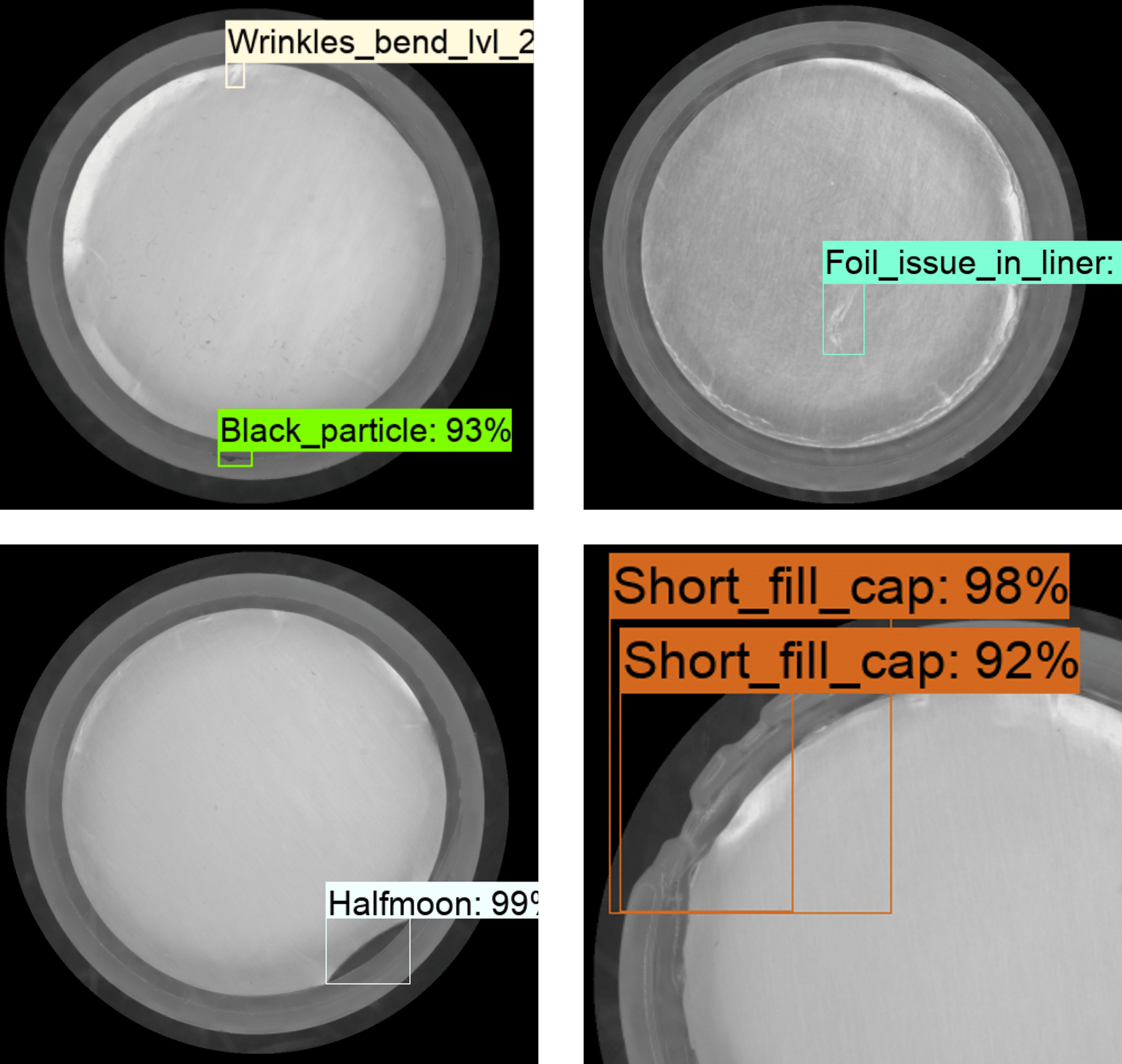
    • Jidoka’s deep-learning engine identifies micro-defects such as chipping, short fills, cracks, surface lines, and lapping marks with >99% sensitivity and >95% specificity.
    • Each part is classified as OK / NG / Rework /Manual-Verification based on severity and rules.
  • Automated Sorting & Seamless Line Integration
    • Inspection verdicts are sent instantly to the PLC, triggering auto pneumatic ejection for NG and reworkable pieces — while OK parts continue downstream for packing.
    • The system integrates easily into existing lines without interrupting production flow.
  • Scalability & Smart Analytics
    • A single setup supports 28 product variants and up to 120 parts per minute, enabling future expansion with zero hardware changes.
    • All inspection data is logged with defect images and production metrics, powering live dashboards, traceability, and continuous quality improvement.

Big Wins

By deploying Jidoka’s Kompass and Tigris, Avon Seals achieved:

40% Better Defect Detection

Consistently catches micro-defects like chipping and cracks that previously escaped manual inspection.

‍120 Parts Per Minute Throughput

High-speed dual-face inspection fully aligned with production scale and takt-time demands.

28 Variants on One System

A unified hardware setup enables seamless variant switching with zero changeover downtime

>90%Reduction in Operator Mundane Workload

Automated inspection eliminates fatigue-driven errors while boosting productivity and morale.

Partnering with Jidoka to automate the inspection of our carbon and ceramic seal face components has elevated ourquality control standards to a level that manual inspection simply could not achieve.

What impressed us most was the team’s technical grit. Their ability to deep-dive into complex defect behaviours, understand thenuances of lapping marks, chipping variations, and shadow artifacts, and still engineer a system that performs with commendable accuracy on components that are inherently challenging to inspect.

Despite several real-world complications typical ofcarbon and ceramic surfaces, the Jidoka team responded with exceptional clarityand persistence. Every time we raised a technical concern, they analysed itthoroughly, refined the model, and ensured the system became sharper and morereliable.

The fact that the machine consistently rejectsdoubtful pieces rather than risking a false acceptance speaks volumes about itsrobustness and the engineering behind it.

They never hesitated to revisit assumptions, rework logic, or pushthe limits to meet our quality expectations.

With Jidoka’s Kompass-powered dual-station system, Avon Seals achieved high-speed, highly accurate inspection for both faces of carbon and ceramic seals —eliminating manual dependency and enabling precise defect categorization with traceability. This transformation ensures consistent world-class quality for leading global pump manufacturers while unlocking future automation possibilities across production lines.

Is AI Vision really AI

Is AI Vision Really “AI”? Or Just Smart Automation?

When Does a Tool Deserve the Label “Artificial Intelligence”?

Recently, during a strategic discussion with a CEO of a manufacturing company, we heard a familiar comment:

“AI Vision isn’t really AI. Machine vision has existed for decades.”

It’s a fair observation.

Industrial vision systems have indeed been used for years. Traditional rule-based inspection systems, threshold detection, barcode reading and template matching are not new.

But the real question is:

When does a system become AI?
And when is “AI” just marketing?

This distinction matters — especially in an era where “AI” is often used as a buzzword.

Let’s clarify.


Traditional Machine Vision vs AI Vision

Traditional Machine Vision (Rule-Based Systems)

For decades, factories have used:

  • Fixed rule-based image processing
  • Edge detection algorithms
  • Predefined pixel thresholds
  • Hard-coded decision trees

These systems work well when:

  • The product is consistent
  • Lighting conditions are stable
  • Defects are predictable
  • Variability is low

But they struggle when:

  • Products vary
  • Surfaces change
  • Lighting shifts
  • Defects are subtle or irregular

Rule-based systems do not “learn.”
They follow instructions.


AI Vision (Machine Learning / Deep Learning-Based)

AI Vision differs fundamentally.

It uses:

  • Convolutional Neural Networks (CNNs)
  • Deep learning classification models
  • Pattern recognition across large datasets
  • Continuous retraining capabilities

Instead of programming every rule manually, the system learns from data.

This allows it to:

  • Detect unpredictable defects
  • Recognise complex surface irregularities
  • Handle product variation
  • Improve performance over time

The key difference is adaptability.


So When Is It Legitimately AI?

A tool can reasonably be called AI when:

1. It Learns From Data

Performance improves based on exposure to new datasets.

2. It Generalises Patterns

It identifies patterns not explicitly programmed.

3. It Adapts to Variability

It handles non-deterministic conditions.

4. It Uses Statistical Inference

Decisions are based on probability models, not fixed rules.

If none of these are present, calling it AI is marketing.

If they are present, the label is justified.


Where the Confusion Comes From

The confusion often arises because:

  • Vendors rebrand existing systems as AI
  • Traditional vision providers add minor ML layers
  • Marketing departments oversimplify technical architecture

As a result, CEOs become skeptical.

And understandably so.

Industrial leaders do not want buzzwords.
They want measurable performance.


When Does AI Actually Add Value?

This is the more important question.

Not:

“Is it AI?”

But:

“Does it outperform traditional automation?”

AI adds value when:

  • Defects are complex and inconsistent
  • High product variability exists
  • Manual inspection struggles with fatigue
  • Traditional rule-based systems hit performance limits
  • New defect types emerge regularly

In low-variability, high-consistency environments, traditional machine vision can still be sufficient.

AI is not always necessary.

That nuance matters.


The Real Problem: AI as a Buzzword

The term “AI” has been overused.

We see:

  • Basic analytics marketed as AI
  • Scripted automation labeled as intelligence
  • Repackaged APIs sold as revolutionary

This creates distrust.

But dismissing all AI because of poor marketing is equally risky.

Because modern deep learning systems are fundamentally different from traditional automation.


Industrial Example

Imagine inspecting painted surfaces.

Traditional rule-based systems require:

  • Manual threshold calibration
  • Constant tuning
  • Adjustment for lighting changes

AI-based systems:

  • Learn what “good” looks like
  • Detect subtle texture deviations
  • Adapt to minor environmental shifts
  • Improve as new defect images are added

In high-value manufacturing, that difference becomes economically significant.


A Practical Framework

When evaluating whether something is truly AI, ask:

  1. Does the system require manual rule programming for every defect?
  2. Can it improve without rewriting code?
  3. Does it handle new variations without re-engineering?
  4. Is performance data-driven or rule-driven?
  5. Is retraining part of the lifecycle?

If the answers indicate adaptability and learning — it is AI.

If not — it is automation.

Both can be valuable.

But they are not the same.


The Bigger Picture

AI is not magic.

It is not a replacement for engineering discipline.

It is not a shortcut to operational excellence.

It is a tool.

And like any tool, it should be applied when it provides measurable performance improvement.

In European manufacturing, that often means:

  • Improved quality consistency
  • Reduced labour pressure
  • Faster inspection cycles
  • Lower scrap rates

If it does not deliver these outcomes, the label does not matter.

If it does, the terminology becomes secondary.


Final Thought

Skepticism toward AI is healthy.

Blind adoption is dangerous.

But informed evaluation is powerful.

The real question is not whether something is labeled AI.

The real question is:

Does it deliver reliable, scalable performance in your operational reality?

That is the only standard that matters.


If you want to separate AI hype from real operational intelligence, our Industrial AI Due Diligence framework provides a structured evaluation — without buzzwords, without assumptions, and without unnecessary risk.


AI Manufacturing

AI Vision in Manufacturing: From Proof of Concept to 24/7 Quality Monitoring 2026

Why Most Vision AI Projects Fail — And What Actually Works

Computer vision is one of the most promising AI applications in manufacturing.

Automatic defect detection.
Label verification.
Dimensional inspection.
Surface quality control.
Real-time monitoring.

On paper, AI Vision looks like an obvious win.

Yet in reality, many vision projects never move beyond the pilot phase.

At D&D AI Solutions, we have evaluated and validated dozens of AI vision systems across European industrial environments. The difference between hype and real impact is significant.

This article explains why most projects fail — and what separates scalable 24/7 quality monitoring from expensive experiments.


The Real Problem: Manual Quality Is Breaking Down

European manufacturers face increasing pressure:

  • Labour shortages
  • Rising quality standards
  • Increasing product variation
  • Faster production cycles
  • Zero-defect expectations

Traditional inspection methods struggle to keep up.

Humans get tired.
Humans vary in consistency.
Humans cannot inspect at high speed with perfect repeatability.

AI Vision can.

But only if implemented correctly.


Why Most AI Vision Projects Stall

1. Overfitting to Controlled Conditions

Many AI systems are trained in ideal lighting, fixed positions, and stable test environments.

Factories are not controlled labs.

Real-world variables include:

  • Changing lighting conditions
  • Product variation
  • Dust and vibration
  • Mixed product batches
  • Operator interference

When models are not trained for variability, accuracy drops fast.


2. Poor Data Strategy

Vision AI is only as good as the data it learns from.

Common mistakes:

  • Too few defect samples
  • Poorly labeled datasets
  • Lack of edge-case data
  • No retraining strategy

Without structured data pipelines, performance degrades over time.


3. No Integration with Production Systems

Standalone vision systems create dashboards.

But real value comes from integration with:

  • MES systems
  • ERP
  • PLC
  • Production control systems
  • Maintenance workflows

If a defect is detected but no action is triggered automatically, the system becomes passive instead of operational.


4. Latency and Scalability Problems

Many AI models work well in single-line pilots.

But when deployed across:

  • Multiple production lines
  • Multiple plants
  • High-speed operations

Processing delays and infrastructure bottlenecks appear.

Industrial AI must operate in real-time.

Milliseconds matter.


What Production-Ready AI Vision Looks Like

After evaluating numerous solutions, we identified clear criteria for scalable success.

1. Industrial-Grade Hardware

Cameras, lighting systems, and compute infrastructure must be designed for:

  • 24/7 operation
  • Harsh environments
  • Minimal maintenance
  • Edge-based processing

Without robust hardware, software performance is irrelevant.


2. Adaptive Learning Architecture

Production-ready systems include:

  • Continuous retraining pipelines
  • Drift detection
  • Version control
  • Dataset management

Factories evolve.
Your AI must evolve with them.


3. Real Operational Triggers

True Smart Quality means:

  • Automatic line stop triggers
  • Real-time rejection systems
  • Root cause detection
  • Feedback loops to upstream processes

AI Vision must influence production decisions — not just report them.


4. Clear ROI Measurement

Vision AI should impact measurable KPIs such as:

  • Defect reduction (30–40% common improvement)
  • Reduced manual inspection labour
  • Faster throughput
  • Reduced warranty claims
  • Improved compliance documentation

If ROI cannot be modelled clearly before deployment, the investment carries risk.


From Pilot to 24/7 Quality Monitoring

The transition from pilot to scale requires structure.

At D&D AI Solutions, we implement vision AI in phases:

Phase 1 – Process & Data Audit

We assess defect types, production speed, data availability, and variability.

Phase 2 – Controlled Pilot

Limited-scope deployment with defined success metrics.

Phase 3 – Integration Layer

Connection with MES, ERP, and production systems.

Phase 4 – Multi-Line Scaling

Infrastructure validation for speed and volume.

Phase 5 – Continuous Optimisation

Performance monitoring and retraining governance.

This structured rollout prevents pilot stagnation — one of the most common industry failures.


Vision AI as Part of a Smart Factory Architecture

Vision AI should not operate in isolation.

When connected to:

  • Robotics & cobots
  • Predictive maintenance systems
  • Digital twins
  • Smart warehousing
  • Process intelligence

It becomes part of a fully integrated Smart Factory ecosystem.

For example:

Detected surface defects can trigger root-cause analytics in upstream machinery.
Label inconsistencies can automatically adjust packaging configuration.
Dimensional drift can signal calibration issues before breakdown occurs.

This is where AI moves from inspection to operational intelligence.


The Competitive Advantage for European Manufacturing

Europe competes on:

  • Quality
  • Precision
  • Compliance
  • High-value manufacturing

AI Vision strengthens all four.

When implemented correctly, it enables:

  • Near-zero defect production
  • Reduced labour pressure
  • Faster certification audits
  • Increased trust from global customers

But only if it is production-ready.


Final Thought

AI Vision is not a plug-and-play solution.

It is a strategic quality infrastructure.

Manufacturers that treat it as a gadget will struggle.

Manufacturers that integrate it as a core operational layer will gain structural advantage.

The difference lies in validation, integration, and disciplined deployment.


Discover If AI Vision Can Reduce Your Defect Rate

If you want to understand where Vision AI can deliver measurable performance improvement — and where it may not — our Industrial AI Due Diligence process provides a structured, risk-controlled roadmap.

Discover your hidden factory losses and build a production-ready Smart Quality system.